
Permanent Eyebrow Transplant (EBT)
Eyebrows frame the face, and thin or patchy brows can make a bigger difference to your appearance than you might think. Many patients come to us after years of drawing on their eyebrows every day.
At Bangkok Hair Clinic, permanent eyebrow transplantation uses single-hair grafts taken from the back of your own scalp. The doctor implants each hair individually, following the natural angle and direction of eyebrow growth. The result is designed to look like your natural eyebrows, not drawn-on brows, and the transplanted hairs typically continue to grow for life.
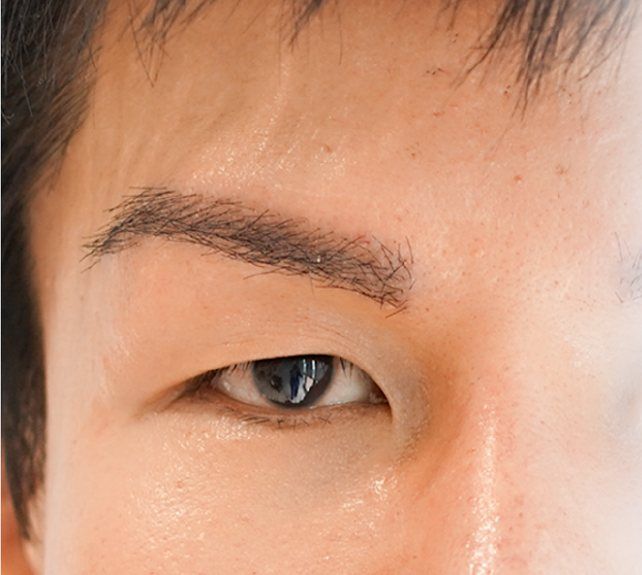
- Approximately 300–800 grafts for both eyebrows
- Procedure takes approximately 3–4 hours
- Single-hair grafts implanted individually
- One fixed package price, regardless of graft count
Who Is Suitable for Eyebrow Transplantation?
Suitable for:
- People with thin eyebrows, patchy brows, or short tails: Due to genetics, ageing, or years of eyebrow plucking.
- People with partial eyebrow loss: Due to scars, burns, or accidents.
- People who want fuller eyebrows: Without drawing them on every day or repeatedly getting eyebrow tattoos.
- People with sufficiently fine donor hair: Hair at the back of the scalp that can blend naturally with eyebrow hair.
May not be suitable for:
- People experiencing eyebrow loss due to active skin conditions or uncontrolled medical conditions: The underlying condition should be treated first. The doctor may refer you to a dermatologist.
- People who have recently had eyebrow tattoos or microblading: The doctor will advise how long you should wait before the procedure.
- People who do not want to trim their eyebrows: Transplanted hairs retain their scalp-hair growth characteristics and continue to grow, so regular trimming is necessary.
The doctor will assess these factors during your consultation. If eyebrow transplantation is not suitable for you, we will explain the reasons clearly and honestly.
Which Donor Hair Preparation Method Is Right for You?
Eyebrow grafts are harvested from the back of the scalp. We offer two donor-area preparation methods to help the back of your head look unchanged after the procedure.
| Partial Shave | Long Hair | |
|---|---|---|
| Donor area preparation | Small sections are trimmed while the remaining hair is kept long | Hair is neither shaved nor trimmed |
| Suitable for | Most eyebrow transplant cases | People who do not want any visible change to their hairstyle |
| Procedure time | Approximately 3–4 hours | Slightly longer |
| Price | Same package price | Same package price |
The doctor will recommend the most suitable method during your consultation, based on the length of your hair and the characteristics of your donor area.
The Eyebrow Transplant Procedure
One day before surgery, you will meet the doctor for a preoperative consultation. The doctor will conduct a detailed assessment, agree on your desired eyebrow shape with you, and confirm the required graft count.
On the day of the procedure:
Eyebrow Design
The doctor will draw your new eyebrow shape together with you, taking into account your facial features, existing eyebrow pattern, and desired appearance. The final design will be confirmed before the procedure begins.
Local Anaesthesia
Every patient receives mild sedation, gentle vibration, and massage to help reduce discomfort during anaesthetic injections around the eyebrows and at the back of the scalp.
Graft Harvesting
The doctor carefully harvests individual hair grafts from the back of the scalp, selecting the finest hairs to match your eyebrows.
Micrografting
Grafts are prepared under a stereomicroscope and stored in a graft-preservation solution at 2–4°C.
Pre-Made Incisions
The doctor creates tiny incisions in the eyebrow area at a low, flat angle, following the intended growth direction of each hair.
Graft Implantation
Each graft is placed individually into the prepared incision using fine forceps under the doctor's supervision.
Cleaning and Dressing
The transplanted area is cleaned, and the donor area is dressed.
The entire procedure takes approximately 3–4 hours, including breaks.
When Will You See Results?
| Timeline | What to Expect |
|---|---|
| First 2–3 days | Redness and small scabs may appear around the transplanted hairs. Swelling around the eyes may also occur. |
| Days 7–14 | Scabs fall off, and the eyebrows begin to settle. |
| Weeks 2–4 | Transplanted hairs shed temporarily. This is normal; the hair follicles remain beneath the skin. |
| Months 3–4 | New eyebrow hairs begin to grow. |
| Around 12 months | Full results become visible. |
We provide follow-up care throughout the first year, with appointments at 2 weeks and 1, 3, 6, 9, and 12 months. Follow-ups can take place at the clinic or by video call.
If the results at 10–12 months do not meet our standards, we will provide corrective treatment at no additional cost, provided you have followed the postoperative care instructions and attended regular follow-up appointments with us.
Eyebrow Transplant Before and After
These photographs show our own patients, who received treatment and had their photographs taken at our clinic with their consent. Results vary depending on each individual's hair and follicle characteristics.
How Much Does an Eyebrow Transplant Cost?
Eyebrow transplantation is offered at one fixed package price, regardless of the number of grafts, because it requires significantly fewer grafts than a scalp hair transplant.
Send us photos of your eyebrows for the doctor to assess your suitability. We will confirm the package price before you book your procedure, and the price will not change based on the graft count.
The Package Includes:
- Free online doctor consultation
- Medication for 6 months
- Postoperative care kit
- Yellow laser treatment to help reduce swelling
- Up to 1 year of in-clinic Low-Level Laser Therapy (LLLT)
- One year of follow-up care, in person or by video call
- Complimentary corrective treatment if the results at 10–12 months do not meet our standards, provided you have followed the postoperative care instructions and attended regular follow-up appointments
You can enquire about the package price for free through an online doctor consultation.
How Does Eyebrow Transplantation Work?
Why We Use Single-Hair Grafts
Natural eyebrows grow as individual hairs rather than in groups like scalp hair. For this reason, we use only single-hair grafts harvested from the back of the scalp, where the hair is typically finer and most similar to eyebrow hair.
Each graft is extracted using a small FUE punch tool, prepared under a microscope, and kept cool until implantation.
Hair Angles and Growth Direction
Eyebrow hairs lie almost flat against the skin and change direction along the natural eyebrow pattern. At the inner brow, hairs angle slightly upward and outward before gradually sweeping sideways towards the tail.
The doctor creates each incision in advance, following the angle and direction required for that specific part of the eyebrow. The grafts are then implanted individually using fine forceps. This helps create smooth, natural-looking eyebrows without hairs sticking up.
Why Transplanted Eyebrows Need Trimming
Transplanted eyebrow hairs retain the characteristics of scalp hair, which means they grow longer than natural eyebrow hairs. Most people trim them every few weeks, much like routine eyebrow grooming.
How Long Do Transplanted Eyebrows Last?
The grafts are taken from scalp areas that are resistant to the hormones responsible for genetic hair loss. As a result, transplanted eyebrow hairs typically continue to grow for life.
Preparing for Surgery
Good preparation helps the procedure run smoothly and reduces the risk of complications. We will provide a complete preparation guide when you book your procedure. Key instructions include:
- Inform the doctor about all medications, supplements, medical conditions, and drug allergies. Do not stop any prescribed medication without consulting us first.
- Avoid alcohol and fermented foods for at least one week before surgery.
- Stop or reduce smoking for two weeks before surgery. Nicotine constricts blood vessels and reduces blood flow to the hair follicles.
- Avoid eyebrow tinting, tattooing, or microblading during the week before surgery. Ask us how long you should wait after these treatments.
- Get enough rest the night before surgery, drink plenty of water, and avoid tea, coffee, and carbonated drinks on the day of the procedure.
- Wear a button-up shirt so you do not need to pull clothing over your head after the procedure.
Preoperative Blood Tests
Recent blood test results are required for HIV, hepatitis B, hepatitis C, and syphilis. You may provide results from another facility or have the tests performed at our clinic.
Postoperative Care
Proper aftercare plays an important role in the long-term growth of transplanted eyebrow hairs. We will provide a complete aftercare guide on the day of your procedure. Key instructions include:
- Take all prescribed medications exactly as directed by the doctor.
- Do not touch, rub, scratch, or pick at the eyebrow area for 2 weeks.
- Avoid bending your head below waist level for 1 week.
- Avoid alcohol and smoking for at least 1 week.
- Avoid strong direct sunlight for 2 weeks.
- Walking is permitted as usual, but avoid exercise that causes sweating until the doctor gives you permission.
- Avoid makeup, eyebrow tinting, and eyebrow grooming products on the transplanted area until the wounds have healed properly.
- Eat a balanced diet with adequate protein and avoid strict dieting.
Normal Recovery
Some side effects after eyebrow transplantation are a normal part of recovery and usually resolve as the body heals.
- Swelling: Around the eyes during the first few days.
- Redness and small scabs: Around the transplanted hairs. These usually fall off within 7–14 days. Do not pick at them.
- Tightness, soreness, or numbness: At the back of the scalp, usually improving within 1–2 weeks.
- Temporary shedding: Transplanted eyebrow hairs typically shed during weeks 2–4. The follicles remain in place, and new hairs will grow from the same follicles.
Contact the clinic immediately if you experience severe pain, progressively worsening swelling, or pus or unusual fluid coming from the wounds.
Why Choose Bangkok Hair Clinic?
Eyebrow transplantation requires both medical precision and detailed aesthetic planning. At Bangkok Hair Clinic, the same team cares for you from your initial photo assessment through your 12-month follow-up.
- Designed for Your Facial Features: The doctor designs your eyebrows together with you to complement your facial structure and desired shape, rather than using a standard template.
- Single-Hair Grafts, Implanted Individually: Each graft contains one hair, placed according to the angle and direction required for each part of the eyebrow.
- Doctor-Led Key Steps: The doctor personally harvests the grafts and creates every incision.
- Minimal Visible Change to the Donor Area: We prepare the donor area using either Partial Shave or Long Hair techniques, allowing the surrounding hair to cover the area naturally.
Frequently Asked Questions (FAQs)
Most patients need approximately 300–800 grafts for both eyebrows, depending on their existing eyebrows and desired density. Send us your photos for an assessment.
The procedure takes approximately 3–4 hours.
Yes, our technique uses single-hair grafts implanted individually at the correct angles. The hairs lie flat against the skin and follow the natural direction of eyebrow growth.
Yes. Transplanted hairs come from the scalp and grow longer than natural eyebrow hairs. Most people trim them every few weeks.
The grafts are taken from areas resistant to genetic hair loss, so transplanted eyebrow hairs typically continue to grow for life.
Transplanted hairs typically shed during weeks 2–4. New eyebrow hairs begin to grow around months 3–4, with full results visible at approximately 12 months.
No, you do not need to shave your entire head. We offer Partial Shave and Long Hair donor-area preparation methods to help the back of your scalp maintain its usual appearance.
In most cases, yes. The doctor will examine your eyebrow area and advise whether you need to wait before undergoing the procedure.
Small scars are possible, as no transplant technique is completely scar-free. The extraction sites at the back of the scalp are tiny, less than 1 mm, and can be concealed by surrounding hair. The small incisions in the eyebrow area generally heal with minimal visible scarring.
We aim for a graft survival rate of at least 90–95%. We carefully manage grafts at every stage, prepare them under a stereomicroscope, store them in a preservation solution at 2–4°C, minimise handling, and follow a "first harvested, first implanted" approach.
However, the survival rate also depends on your skin condition and whether you follow the doctor's postoperative care instructions.
As with any medical procedure, complications are possible, although they are uncommon. These may include infection, folliculitis (small pimple-like bumps around hair follicles), lower-than-expected graft survival, and prolonged numbness.
We minimise these risks through sterile techniques and one year of follow-up care. The doctor will explain the potential risks before surgery.
You may experience mild discomfort during the initial anaesthetic injections. Every patient receives mild sedation, gentle vibration, and massage to help reduce discomfort. After the anaesthetic takes effect, most patients feel only pressure.
Eyebrow transplantation has one fixed package price, regardless of the number of grafts, because it requires significantly fewer grafts than a scalp hair transplant. The package includes medication, a postoperative care kit, laser treatments, and one year of follow-up care.
Free Online Doctor Consultation
Send us clear photos of your eyebrows from the front and the back of your scalp. The doctor will assess whether eyebrow transplantation is suitable for you, estimate the number of grafts required, and provide the package price.
Your online consultation is free and comes with no obligation to proceed.